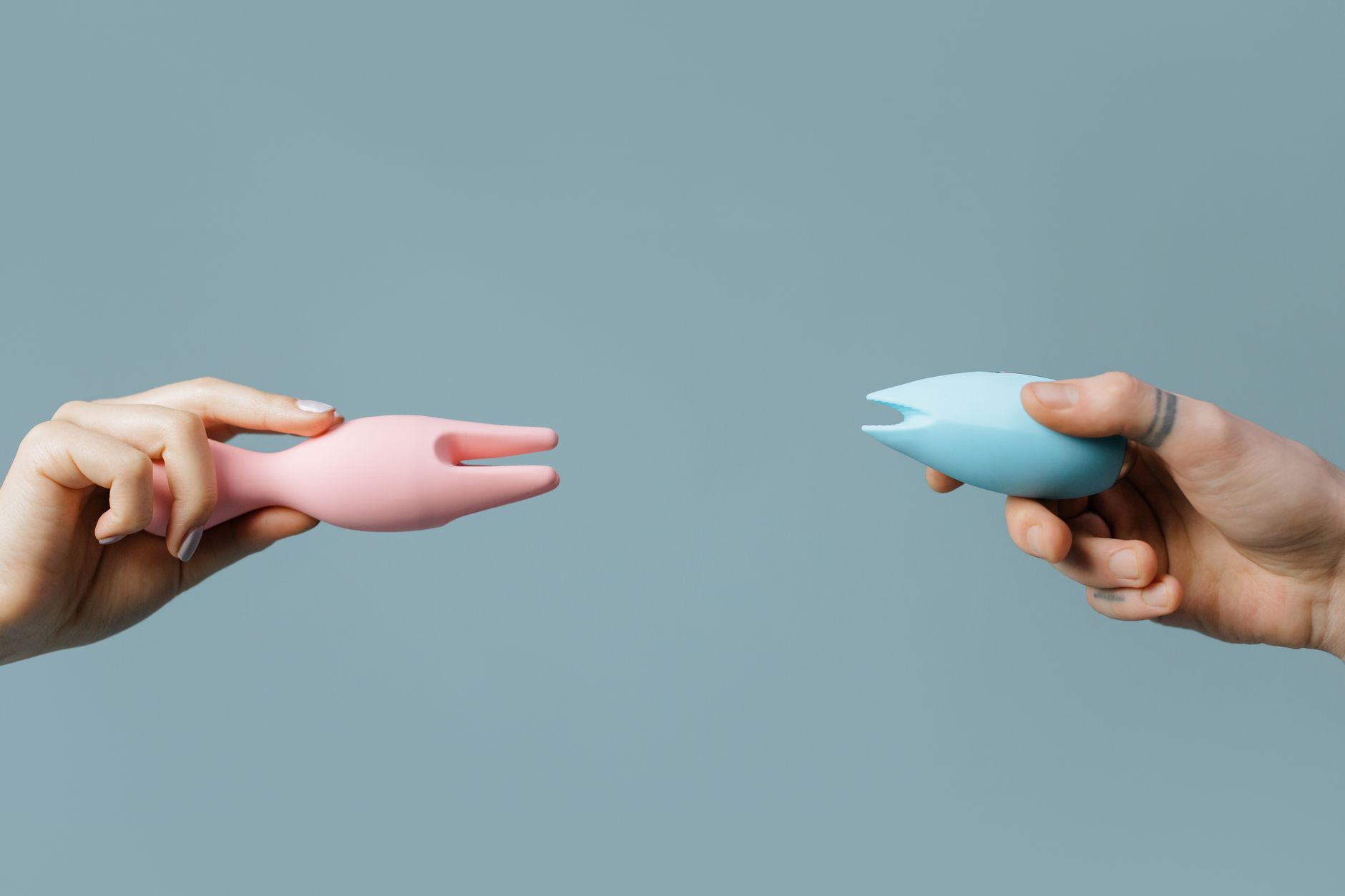
The sensitivity rollercoaster is completely normal
Honestly, if your orgasms feel different from one day to the next, you're not losing your mind. Your clitoris contains 8,000 nerve endings, and they're exquisitely sensitive to hormonal shifts, stress levels, hydration, where you are in your cycle, and even what you ate that morning. That sensitivity variability isn't a flaw. It's just biology doing what biology does.
The problem isn't your body. It's that most vibrators are designed as if every person's clitoris responds identically to direct, sustained friction. They don't. And when sensitivity fluctuates, direct vibration can feel anywhere from perfect to overwhelming to completely numb depending on the day.
That's where suction-based clitoral vibrators enter. A lemon vibrator works differently than traditional vibrators because it uses gentle air-pulse suction instead of direct vibration. This changes everything about how your body responds, especially when sensitivity is unpredictable.
Why direct vibration fails when sensitivity shifts
Think of traditional vibrators like this: they press and shake directly against the clitoris. When you're highly sensitive, that feels like too much. When you're less sensitive, it feels like nothing. There's almost no middle ground.
Direct vibration also desensitizes tissue over time through repeated mechanical contact. This is why some people find that the same vibrator that worked for years suddenly feels dull. Your nerve endings adapt. Friction-based stimulation essentially trains your clitoris to require more and more intensity to feel the same sensation.
With a lemon vibrator, the mechanism is completely different. Instead of vibrating against the tissue, it creates a rhythmic suction around the clitoris. This stimulates a broader area of nerve tissue without the same mechanical pressure. The result: consistent pleasure across different sensitivity states, and no built-in desensitization.
How suction actually works on unpredictable sensitivity
When you place a lemon vibrator over your clitoris and turn it on, the device creates gentle waves of pressure and release. Your clitoris is drawn up slightly into the silicone cup, then released, then drawn again. This pattern activates nerves both at the surface and deeper within the clitoral structure.
Here's the key: this type of stimulation activates different nerve pathways than vibration does. Instead of overloading the most sensitized surface nerves, suction engages the broader clitoral complex. This means that even when your surface sensitivity is low (postpartum, stressed, mid-cycle), the underlying nerve tissue still responds.
It also means that when you're hypersensitive (late in your cycle, or after starting certain medications), the suction feels intense without being sharp or overwhelming. The pressure is diffuse rather than pinpoint.
The rhythm matters more than the intensity
When sensitivity fluctuates, intensity becomes a moving target. One day, pattern 2 feels perfect. The next day, pattern 2 feels aggressive. This is frustrating, and it makes pleasure feel unreliable.
With a lemon vibrator, most people find that the rhythm of the suction stays pleasurable even when their overall sensitivity shifts. This is because the rhythm is patterned rather than chaotic. Your body can anticipate the pulse. You're not fighting against unpredictable intensity spikes.
Start at the lowest pattern (usually 1 or 2). Let yourself feel where the sensation sits. If it feels like nothing, move up one pattern and wait another minute. Most people find their sweet spot within the first few minutes, and it stays consistent throughout the session. The rhythm creates predictability even when your sensitivity doesn't.
Setting yourself up for success with an unpredictable body
If you've been frustrated with vibrators because they work beautifully one day and feel useless the next, there are a few tactical things that help.
First: hydration matters more than you'd think. Your clitoral tissue plumps up when you're well-hydrated. This changes sensitivity dramatically. If sensitivity has been low, drink a full glass of water 20-30 minutes before you plan to use your lemon vibrator. This isn't magic, but it's measurably effective.
Second: warm up longer than you think you need to. When sensitivity is unpredictable, foreplay becomes essential. Spend 10-15 minutes on other forms of stimulation before you reach for the lemon vibrator. Let your body gradually build arousal. Your clitoris literally fills with blood when you're aroused, which increases nerve sensitivity. You're not wasting time. You're priming the system.
Third: use water-based lubricant even if you don't think you need it. Lubrication reduces friction between the silicone and your tissue, which allows the suction mechanism to work more effectively. A small amount on the rim of the cup makes a noticeable difference in how the device feels. This is true even for people who produce plenty of natural lubrication.
Fourth: pay attention to your cycle, not just your mood. If you track your cycle at all, you'll notice that sensitivity peaks around ovulation and dips just before menstruation. When you're in a low-sensitivity window, lower your expectations about intensity. Use a pattern that feels pleasant rather than powerful. The goal is consistent pleasure, not the strongest orgasm possible.
When inconsistency points to something bigger
If your sensitivity has shifted suddenly over weeks or months (not just day-to-day fluctuation), it's worth checking in with what else is happening. Certain medications absolutely flatten sensitivity. Birth control, antidepressants, antihistamines, and blood pressure medications can all affect clitoral responsiveness. So can thyroid imbalance, low iron, and hormone shifts.
This doesn't mean you're broken. It means your body is signaling that something systemic has changed. If the shift coincided with a medication change, a diet shift, increased stress, or a major life transition, that's relevant information. <a href="/blog/how-to-use-lemon-vibrator-when-clitoral-sensation-increases-after-starting-antidepressants">Understanding how medications affect arousal</a> can help you work with your lemon vibrator more effectively.
Relationship dynamics also matter. If sensitivity drops specifically when your partner is present, that's different from sensitivity dropping across the board. The fix might be emotional rather than physical. If you're consistently less sensitive during partnered sex than during solo play, that signals something about safety, presence, or communication that's worth exploring.
Building trust in your body again
Most people whose sensitivity feels unpredictable have spent months or years fighting their own bodies. You reach for a vibrator hoping it will work, and sometimes it does and sometimes it doesn't. That's exhausting. Over time, you start to distrust yourself.
A lemon vibrator helps rebuild that trust because it delivers more consistent results. This consistency matters psychologically, not just physically. When you use your device and it works reliably, you stop bracing for disappointment. You relax into the experience. And relaxation itself improves sensitivity.
Starting with the lowest patterns and moving up slowly reinforces this. You're not chasing intensity. You're discovering what feels good on any given day. Some days that's pattern 3. Some days it's pattern 6. Both are fine. Both are valid. Your body isn't failing you. It's just being human.
The role of a partner (if you have one)
If you're using a lemon vibrator with a partner, the unpredictability actually becomes an advantage. You can show them what patterns work on a given day. You can say, "Today's a low-sensitivity day. Start at pattern 2 and let me guide you." This transforms an inconsistency into communication.
Partners often feel confused or rejected when sensitivity seems to shift without warning. Naming it directly removes the guesswork. <a href="/blog/how-to-use-lemon-vibrator-when-you-want-deeper-connection-with-your-partner">Building deeper connection through toys</a> starts with this kind of transparency.
The lemon vibrator also gives both of you permission to slow down. Because suction-based stimulation often requires patience and rhythm rather than aggressive intensity, it naturally creates space for presence. You're not rushing toward an orgasm. You're exploring what your body can feel on any particular day.
FAQ
Why does my clitoral sensitivity change so much from day to day?
Your clitoris has 8,000 nerve endings and responds to hormones, hydration, stress, cycle phase, medication, and blood flow. Sensitivity variation is completely normal. It's not a sign of numbness or dysfunction. Your body is just reflecting your overall health and life circumstances. Days when you're stressed, dehydrated, or early in your cycle often feel less sensitive. Days when you're well-rested, hydrated, and around ovulation often feel more responsive.
Can using a lemon vibrator help me understand my sensitivity patterns better?
Yes. Because a lemon vibrator delivers more consistent stimulation, you'll start noticing patterns in what actually changes sensitivity versus what's just mood. You might discover that hydration matters more than you thought, or that stress genuinely flattens your response. This self-knowledge makes pleasure more predictable over time.
Is it normal to need different vibrator patterns on different days?
Completely normal. Your body isn't a machine with fixed settings. A pattern that feels perfect on Monday might feel aggressive on Thursday. This isn't a failure. It's your body responding to real physiological changes. A good lemon vibrator has multiple patterns specifically because sensitivity varies.
Will using a lemon vibrator desensitize me like other vibrators have?
Unlikely. Suction-based stimulation activates different nerve pathways than direct friction vibration. Because there's less mechanical pressure on the clitoris itself, you don't get the same adaptation and desensitization that comes with traditional vibrators. Many people find that a lemon vibrator actually helps sensitivity recover if it's been dulled by years of friction-based toys.
What if my sensitivity is low and a lemon vibrator doesn't help?
Start by checking whether hydration, stress, sleep, and cycle phase might be factors. Then consider whether a medication change coincided with the sensitivity drop. If sensitivity has plummeted across the board and nothing is helping, it's worth talking to a doctor. But also give yourself permission to use your lemon vibrator on lower patterns just for the pleasure of sensation, without expecting orgasm. Pressure to climax often makes sensitivity worse.
Can I use a lemon vibrator if I have a lower libido than my partner?
Yes, and it might actually help bridge the gap. Because a lemon vibrator requires less total friction and can deliver pleasure without intensity, it's gentler on bodies that need more time to warm up. This can make solo sessions more pleasant, which often improves overall desire. <a href="/blog/how-to-use-lemon-vibrator-when-you-have-a-lower-libido-than-your-partner">Mismatched desire doesn't require intense stimulation</a>. Sometimes it just requires the right tool and the right pace.
The takeaway: consistency is a choice
Your clitoris isn't broken. Sensitivity shifting is not a sign of failure. You're navigating a complex biological system that responds to dozens of inputs. A lemon vibrator doesn't erase those inputs, but it works with your body's natural variation rather than against it.
Start with the lowest pattern. Let the rhythm do the work. Notice what day-to-day changes you can actually control (hydration, stress, sleep, foreplay length) versus what you can't. And give yourself permission to feel different things on different days. That's not unpredictable. That's just being alive.
Ready to explore? We're here to help. Reach out with questions at <a href="/contact">contact</a>, or browse our full collection of clitoral vibrators designed for consistency and pleasure.